Location
Tehsil Road, Najafgarh, New Delhi-110043
Best Lawyer in Delhi.
Need Help ? : Call: +91- 9990723215


Tehsil Road, Najafgarh, New Delhi-110043

New Delhi
WHAT IS THE SPECIAL MARRIAGE ACT
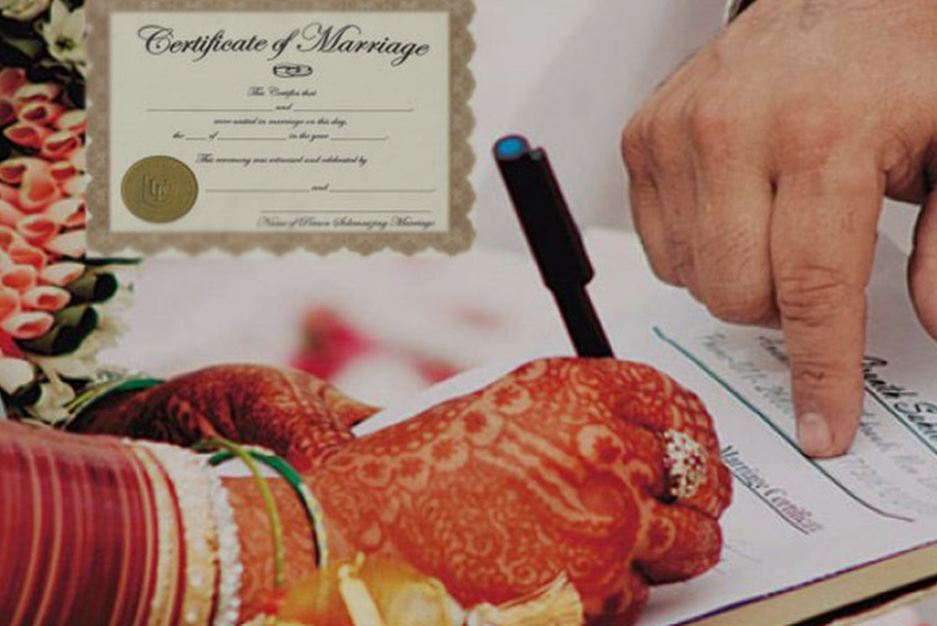
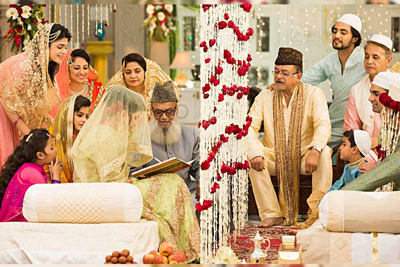
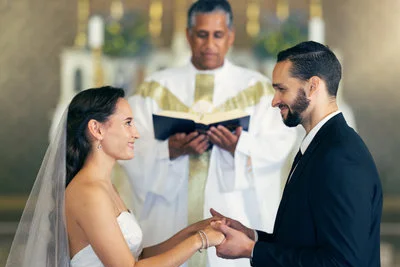
A marriage under the Special Marriage Act, 1954 allows people from two different religious backgrounds to come together in the bond of marriage. The Special Marriage Act, 1954 lays down the procedure for both solemnization and registration of marriage, where either of the husband or wife or both are not Hindus, Buddhists, Jains, or Sikhs.
According to this Act, the couples have to serve a notice with the relevant documents to the Marriage Officer 30 days before the intended date of the marriage. However, while this process has been enabled online on https://www.onlinemarriageregistration.com/, the couple will have to visit the marriage officer for the solemnization of marriage.
Registration process Special Marriage Act:
Both parties are required to be present after the submission of documents for issuance of public notice inviting objections.
One copy of the notice is posted on the notice board of the office and a copy of the notice and is sent by registered post to both parties as per the given address.
Registration is done 30 days after the date of notice after deciding any objection that may have been received during that period by the SDM.
Both parties along with three witnesses are required to be present on the date of registration.
GET FAMILY LAW AND DIVORCE ADVICE FROM TOP DIVORCE LAWYERS IN DELHI
If you are not happy with your married life and want to get the divorce then first you should find a good lawyer. www.divorcelawyernearme.in has a team of expert lawyers who will help with solid and practical advice on divorce related matters. Get necessary support if you had decided to put an end to marriage, or to protect your legal right.
Following Laws for Marriage exist in India
The Hindu Marriage Act, 1955
The Special Marriage Act, 1954
The Indian Divorce Act, 1869
The Foreign Marriage Act, 1969
The Muslim Marriage Act, 1957
The Dissolution of Muslim Marriage Act, 1939
The Indian Christian Marriage Act, 1872
Divorce Laws in India
The Hindu Marriage Act, 1955 for Hindus, Sikhs, Jains, and Buddhists Religions
The Dissolution of Muslim Marriages Act, 1939 for the Muslim Religion
The Indian Divorce Act, 1869 for the Christian Religion
The Parsi Marriage and Divorce Act, 1936 for the Parsi Religion
Special Marriages Act, 1954 for All the other Inter-Cast or Inter-Religion
FAMILY COUNSELING IN DELHI-LAST RESORT TO SAVE THE MARRIAGE
Get clear explanation regarding divorce procedure based on Indian courts and laws through an in-person consultation and through “Family Counseling” which would give you an essential understanding of the divorce process, pros & cons of it. Also, it may assist you to bridge the gap between you and your spouse. You are supposed to be conscious of the information that the divorce procedure in India extends for approximately a year and in some special cases of disputes the process may continue for years.
FAMILY LAW RELATED EXPERT LEGAL ADVICE AND CONSULTATION
Advocate Rahul Singh has committed and dedicated professional lawyers for family law disputes and matrimonial cases in Delhi. We have an expert and experienced legal team to provide legal service for mutual divorce cases, contested divorce cases, marriage, court marriage, child custody, adoption, property dispute in family, maintenance & support, and illegitimacy in Delhi. We are a team of specialized experienced family law advocates after years of practice hand on in handling all matrimonial disputes at Family Courts in Delhi. Our divorce law specialists have also experienced divorce mediation proceedings in Delhi Mediation Center for the preliminary divorce hearings.
Our aim is to provide Stress and huddle-free service at a cost-effective to our valuable clients. We are providing counseling and meditation service for the mutual divorce process.
Family law is a broad area of practice so the following are the most common services provided by our firm.
Marriage’s measures and necessities
Document of Registration of marriage
The right reason for Divorce
Division of property and assets
Maintenance & Support
Child Custody/Adoption
Domestic violence case
Frequently Asked Questions by Delhi's Best Divorce Lawyer
How much time does a mutual divorce take in India?
Firstly, you need to understand her reasons for not agreeing to a mutual divorce. It may be due to emotional reasons. Or is it due to monetary reasons? Besides, you can make her realize how this decision can benefit her. Otherwise, if you want to live separately, a divorce petition is the only way. So, you can file a divorce petition against her if you have a base. Also, you will have to pay maintenance as per the court’s decision. For better assistance, contact Adv. Rahul Singh and get the best way out for such issues.
So, it is better to go to a legal expert rather than waste your precious time. Since they can determine the real cause of the issue, if your wife is not ready to dissolve the marriage, you can opt for RCR. So, by filing the file for restitution of conjugal rights, you can ask your wife to live back with you. And, if she disagrees, then you can go for mutual divorce. With the help of legal experts, you can prove your grounds and get the order in your favor. Thus, an expert lawyer can help both parties to agree to a mutual divorce quickly.
Can the wife claim maintenance after mutual divorce?
There are certain conditions where the wife may or may not claim maintenance after mutual divorce. Like, the wife need not be living separately by mutual consent. And she should not be living in adultery. Also, if she has quit her right to maintenance, she cannot demand it later. Besides, in case of mutual divorce, the wife can claim maintenance as long as she remains unmarried. Or she is incapable of maintaining herself. To better understand your rights, contact Adv. Rahul Singh.
Further, in case of mutual divorce, both parties can decide on the alimony or maintenance through their consent. And the amount is determined based on various factors. Such as the responders’ income, their property, etc. In India, a working woman can ask for alimony as well. So, the court considered whether she could support her lifestyle. Also, if she has other sensible demands or dependants, the court may grant her maintenance. Thus, contact the top Delhi lawyer today to better understand your rights in the mutual divorce process.
Is a lawyer necessary for a mutual divorce?
Yes, it is essential to hire a lawyer for mutual divorce. Also, there are many ups and downs in the case. And in many cases, the settlement is not fair among both parties. Thus, hiring a reliable lawyer who can defend your case and inform you about your rights is vital. Plus, they can help you file related cases like maintenance, child custody, etc. Hence, get in touch with Adv. Rahul Singh, as he can effectively deal with such matters efficiently. And guide you about all your rights and intricacies of the case very well.
Divorce is not an easy option. Also, it may require many tough decisions for you to make. Hence, it is more likely that you may complicate the situation. Or it can even go out of control. The process of divorce requires taking many varied decisions and steps. Thus, an expert lawyer is vital for better legal advice. And to help you sort the financial and related matters in mutual consent divorce.
How do I pay in mutual divorce?
After signing an MOU in mutual consent divorce, you can pay through demand draft (DD) or post-dated cheque. And, you must mention the payment mode details in the MOU. You can hand it over on the final day when the court passes its decision. Also, make sure to get the stamp paper duly signed by the party receiving it. For further details and help, feel free to contact Adv. Rahul Singh.
Mutual divorce requires two appearances before the court. Firstly, you will have to record your statement that you agree to the mutual divorce. Then, the court will pass an order providing six months to fix your issues. In case you are not able to resolve your issues within this time. Then, you will appear in court after six months, and the court will grant you a divorce. Also, in some cases, it may take 1-2 months, depending on the situation. So, it’s always better to seek a lawyer’s advice. Hence, contact Adv. Rahul Singh to get effective mutual divorce solutions.
Besides, it is possible to reduce the six months. We call this period the waiver of time or cooling period. So, you will need to apply to waive off the period. And the family court has the option to reduce these six months to as few as 15 days or a month. Also, it may depend on the case type and severity of your case. There can be various factors that may affect your case and take time. Thus, it is better to contact a mutual divorce lawyer in Delhi to ensure a hassle-free process.
However, it is better to divide the amount into two or three installments. So, you can pay the first half after the first motion. And the other halves after the second motion. You can pay the remaining part after the final decision of dissolution of your marriage. But, it is essential to get signed consent from the other party. If the wife withdraws her consent, you can ask her to return the money. Well, the entire process can be very tiring. Hence, reach Adv. Rahul Singh to understand every tiny detail. He is the best and most reputed mutual consent divorce lawyer in Delhi.
How many motions are there in mutual divorce?
There are two motions in mutual divorce. Under the first motion, you will have to file the petition in court. Here, both the parties, i.e., husband and wife, give mutual consent for dissolving the marriage. And, under the second motion, both husband and wife confirm their intent to divorce after the cooling-off period. For the second motion, you will appear in court after six months. After this period and hearing with both parties, the court announces the final mutual divorce decree.
Besides, it is better to discuss the future course and child custody in case of mutual divorce. Then you can move ahead with the first motion and record your statement. Also, both parties should be present during both motions as it can be contempt of court. If you cannot appear in court, you can appear through power of attorney. And it should be the family member of the spouse. It is wise to seek a lawyer to ease the mutual consent divorce process.
Is alimony required in mutual divorce?
Alimony in mutual divorce entirely depends on the joint agreement. Also, it relies on the decision of the honorable court. When we consider the case of maintenance, the aim is to seek settlement and come to a mutual consensus. Typically, the wife may get 20%-35% of the husband’s taxable earnings. Also, if the woman is working, she can still file for alimony. But, only if the court realizes that her income is not enough to support her living standard and her demands must be fair. However, if the wife doesn’t want alimony and is ready to waive her rights, you can put it in your petition.
Claiming alimony is one of the fundamental rights that come under divorce laws. But, when any couple files for a mutual consent divorce, this decision depends on their agreement. Also, it is possible that the court may not grant any alimony at all. It depends on the condition and facts of the specific case. And the amount of permanent alimony is entirely the court’s decision based on a few factors. Such as the status and income of the husband, his assets, genuine needs, and earnings of the wife. Hence, the court looks at many facts and proofs to decide whether the alimony is essential.
What are the documents required for mutual divorce in India?
Here is the list of some standard documents needed for filing a mutual divorce in India:
➣ Marriage certificate
➣ Address proof of the parties
➣ Photographs of their marriage
➣ Details of family, property, and assets
➣ Information about their profession and income (Like, salary slip, etc.)
➣ Proof of staying separately at least for a year
Besides, it is wise to seek an expert lawyer to avoid missing any detail or papers necessary. Also, the right advice and facts are crucial for filing the petition. So, they can help you prepare it all and escape from last-minute hassles. And, Adv. Rahul Singh is a trusted lawyer helping you right from issuing summon to the final court decree. Also, he demands fair mutual divorce fees in Delhi. Hence, hire the best divorce lawyer in Delhi to get helpful divorce solutions.
How can I agree with my wife for mutual divorce?
Firstly, you need to understand her reasons for not agreeing to a mutual divorce. It may be due to emotional reasons. Or is it due to monetary reasons? Besides, you can make her realize how this decision can benefit her. Otherwise, if you want to live separately, a divorce petition is the only way. So, you can file a divorce petition against her if you have a base. Also, you will have to pay maintenance as per the court’s decision. For better assistance, contact Adv. Rahul Singh and get the best way out for such issues.
So, it is better to go to a legal expert rather than waste your precious time. Since they can determine the real cause of the issue, if your wife is not ready to dissolve the marriage, you can opt for RCR. So, by filing the file for restitution of conjugal rights, you can ask your wife to live back with you. And, if she disagrees, then you can go for mutual divorce. With the help of legal experts, you can prove your grounds and get the order in your favor. Thus, an expert lawyer can help both parties to agree to a mutual divorce quickly.
How does mutual divorce work in India?
In the past, people used to criticize the concept of divorce a lot. But, now the times are changing in India. You don’t need to stay in an unhappy marriage for the sake of society. And you can file for mutual divorce with the consent of your partner. Also, you can easily hire expert divorce lawyers for such cases. They can guide you all through the process and tiny details. So, right from filing the petition to first-second motions and divorce decree, they take care of it. Hence, mutual divorce can work well for you if you abide by all the laws and rules of the court.
Besides, it has become easy to file a mutual divorce in today’s modern and digital age. So, the online mutual divorce process is the fastest way to dissolve your marriage. You need to visit our site and fill out the divorce form. And share your documents and make the first payment. After every motion, you will make the payment. Also, you can quickly pay online through secure payment gateways. Adv. Rahul Singh is a world-class mutual divorce lawyer. And he can help you all through your divorce process. He makes it quick and effortless for you.
Is it necessary to live separately for mutual divorce?
You must have a valid reason to end your marriage. So, you can finish it under the judicial separation section10. Or under divorce section 13 and section 13B. Also, as per section 13B, both partners must live separately for at least a year. Besides, ‘living separately’ does not mean living in different places. You may be living under a roof but not as spouses. Hence, you can file for mutual consent divorce when you qualify based on these valid grounds. To better understand these fine points, get in touch with Adv. Rahul Singh is one of the best divorce lawyers in Delhi.
Both parties mustn’t wish to carry out the marriage obligation. Also, the parties must not be living as spouses at least for a year. It is crucial because the court won’t go any step further without this. So, any couple cannot file for mutual divorce if they are apart for less than one year. But, you can get six months cooling-off period. So, if you wish to file for divorce before this one year, you can opt for a contested divorce. For example, in some dire cases like torture or other trauma, you can get a divorce within one year. You may have to prove grounds like cruelty, adultery, or unsound mind for such cases. So, you must have a genuine reason.
If one spouse is not ready to appear for second motion of mutual Divorce? What are the remedies available for the second person?
It is possible that your spouse is not ready to appear in the second motion of mutual Divorce. When mutual Divorce is a concern, any party can withdraw their consent. You cannot force your spouse to take any action. However, if you and your partner had come to an agreement to separate, you can bring a contempt of court action against the wife. And it has been recently allowed by the Delhi high court. If you have already made any payment, you can complain about cheating. Besides, you can file a Divorce petition under Section 13 of the Hindu Marriage Act, 1955.
Is registration of marriage a necessary ground for the filing of Divorce?
According to Divorce law, marriage registration is necessary for filing for Divorce. But don’t worry, if you don’t have the registration paper, you can still apply for Divorce in family court. So if you had a marriage based on religious belief and didn’t have the registration paper, you could still apply for Divorce.
Can parents file for Divorce on behalf of their children?
Yes, the parents can file for Divorce on behalf of the children. It is common in India that parents don’t want their children to face court. As a parent, you may choose to file for a Divorce if your daughter is also exhibiting abusive behaviour or any other issues. Simply contact a Divorce lawyer to help you put. They will provide you with the right direction.
Is legal notice required before taking Divorce?
Basically, a legal notice is sent on behalf of a client by the advocate. Besides, there is no specification in law that a party must send legal notice before filing a Divorce. So, It is optional to send a legal notice. You can ask your lawyer to help you and show you the right path.
Is the dissolution of marriage different from Divorce?
Divorce and dissolution of marriage are not the same things. Dissolution is defined as the Act of bringing an end or termination to a legal relationship between two parties. Divorce is a legal process that separates the spouses of a married couple from one another. During the dissolution process, several issues are mutually agreed upon by the parties, including child custody, alimony, property issues, and so forth. In contrast, the court will deal with these issues in the case of Divorce.
Can a couple get legal separations instead of Divorce?
There are many factors to consider when deciding whether to end a marriage. A legal separation is when a court order specifies a couple’s duties while they are still living apart despite being legally separated. It is important to note that although the couple lives apart, they are still married. On the other hand, a couple who is divorcing ends their marriage.
What is the difference between marriage annulment and Divorce?
The Act of declaring a marriage null and void and declaring the law had never recognized the marriage as a legal union is called annulment. On the other hand, Divorce is a procedure that terminates a marriage.
Can NRI’s file a Divorce case in India?
Yes, NRI can file a Divorce case in India to separate from each other. Both partners will be required to appear with their respective lawyers in the family court during the court proceedings. However, if the couple is living abroad or if one of the spouses is living abroad, they can take the assistance of an attorney.
Currently undergoing Divorce in the USA, can a person file for Divorce in India simultaneously?
It is necessary that you meet the residency requirements of the USA before you can file for Divorce. When you get Divorced in the USA, it is accepted in India. Therefore, you do not need to file for a new Divorce in India. If you live in the USA without a resident permit, you can file a case to get separated in India.
Can a couple apply Divorce anywhere in India?
It is necessary for a husband to file for Divorce in the location where his wife lives if he wishes to Divorce her. The wife can now file a Divorce petition in any of the following jurisdictions after the amendment to the Act in 2002. It is possible for the couple to file the petition for mutual consent from anywhere in India.
According to Indian Law, can a man remarry if his wife is not ready to give him a Divorce and they are not living together from the beginning of their marriage?
No, it is illegal. It does not matter whether you are living with your wife. As per Section 494 of the Indian Penal Code, if a person marries a second time while their spouse is still alive, they will be considered guilty. The wife can file a complaint under the husband for justice. Contact with a reliable lawyer who can help you to smooth the procedure.
What is the difference between contested and uncontested Divorce?
The contested and uncontested Divorce are two different cases. Contested Divorces often involve disagreements between the parties regarding the terms and conditions of the Divorce, custody of the children, or even whether they want a Divorce. The Divorce process is uncontested when spouses agree to the Divorce terms and dissolve their marriage. To obtain rights in an uncontested Divorce, the spouse may file a complaint against the partner.
Can you transfer a Divorce case to another state?
Yes, you can transfer a Divorce case to another state. But to do that, you have to fill a petition Under Section 25 of CPC (if the case involves civil law, Divorce, or child custody). But if there is involved any criminal activity like domestic violence, then you have to file a transfer petition under section 406 Cr. P.C. Consult with a reliable Divorce lawyer who will help you to transfer your case in the right way. With years of experience in the field, we can ease the process.
Can fraud before marriage become a ground for Divorce? If yes, what kind of fraud are you accountable for?
Under the Matrimonial law, you can ask for the annulment of marriage. There is no point in carrying a marriage where fraudulent activity is involved. If the responding spouse was already married, you could ask for an annulment of marriage. Besides, there are different types of fraudulent acts that can take place.
Can one spouse move out with the child without getting a Divorce?
It is extremely important that you keep in mind that both parents (whether they are married or not) have parental rights over their children, regardless of whether a court order has been issued or not. So no one has the right to move out with a child without a settlement.
Can a judge dismiss a Divorce case?
Yes, a judge can dismiss a Divorce case. Dismissal hearings are scheduled court hearings that are scheduled to determine whether dismissal is the best course of action in a Divorce case. Dismissal of the case means that no judgment of Divorce will be entered, and the two parties will remain married. Sometimes, the judge gives more time to the couple for mutual settlement.
Can a Divorce be one-sided?
Yes, anyone can send the notice of Divorce. There are two main types of Divorce: Divorce by notice and Divorce by consent. The consent of the receiver of the Divorce notice is not required to give Divorce or Talaq by notice. Depending on the circumstances, either party may not have the consent of the other party to give Divorce in this case. But if any party disagrees with the other party’s decision, he or she can go to court.
How can a wife get a Divorce if her husband cannot be found?
If you have not met or seen your spouse for more than seven years, the person is presumed dead. If the spouse wants to remarriage, he or she can file for a Divorce. After getting the court confirmation, he or she can marry.
Is it possible for a couple to divorce in India through mutual understanding and without having to go to court and file a case?
No. But it is possible to dissolve your marriage by mutual consent without finding yourself in the stressful situation of a contested Divorce. An agreement of mutual consent means that both parties consent to end their relationship without a court hearing. Under the Special Marriage Act, a couple can mutually separate from each other. In mutual understanding, the couple decides to agree on child custody and asset division.
Is triple talaq the only way for a Muslim man in India to take a Divorce in India?
No, triple talaq is not considered a way to Divorce the spouse. A Muslim couple who wishes to Divorce must notify their spouse of their intention. If either or both of the spouses want to get Divorced, they can do so either of their own free will or by mutual consent.
Both a man and a woman can get a Divorce by will under the Islamic Marriage Dissolution Act (1939). The law also provides different other rights to a man and a woman in getting a Divorce. Our expert lawyer can help you to get in-depth knowledge.
How is Divorced settlement calculated in India?
There different types of agreements took place regarding Divorce settlement calculation. The law stipulates that alimony has to pay 25% of the husband’s normal monthly salary to the wife as a gift.
If it is paid in the form of a lump-sum sum payment, it ranges between one-fifth and one-third of the total income of the husband at the time the marriage was ended.
How did the jointly owned house divide during the Divorce process in India?
After getting the Divorce, you can choose your way of living. If the property is registered in the joint name, then both become the property’s equal owner (or according to the registration). Where both parties are co-borrower, the court will distribute the property depending on the contribution.
Can a Muslim woman file petition for contested Divorce in India?
Yes, a Muslim woman can file a petition for contested Divorce. According to the Dissolution of Muslim Marriages Act of 1939, a married woman can file a petition for Divorce. An individual can file a Divorce petition in the Family Court when one of the parties refuses to consent to a Divorce. Divorces of this kind are referred to as contested Divorces.
Is Impotence a ground for annulment?
Yes, impotence can be a ground for annulment. An annulment means the court will declare the marriage null or invalid.
When a person is incapable of consummating a marriage due to physical or incurable incapacity, they are said to be impotent. An annulment of marriage may be required if permanent and incurable Impotence renders the completion of natural sexual intercourse between the parties practically impossible.
In India, can a couple remarry after Divorce?
Yes, in India, a couple can remarry after the Divorce. After the decree of Divorce, the court gives 90 days to appeal for both parties. The couple cannot marry within 90 days, according to the law. If neither of the parties has filed an appeal during this period, then either can remarry after the given appeal period is over.
Is FIR required for Divorce?
It is not necessary to file an FIR to get a Divorce. But, it is sufficient for a spouse to file for a Divorce when even one FIR is filed against a person because of cruelty against the person


















Enquire Now