Best Lawyer in Delhi.

Need Help?: Call: +91- 9990723215

  • Location

    Tehsil Road, Najafgarh, New Delhi-110043

  • Rahul Singh & Associates

    New Delhi


Contested Divorce In India

Conditions, Procedure and Laws in Delhi :
A contested divorce shall be filed by one spouse when another one is not agreed to divorce and there are certain grounds under which a divorce petition can be filed before the Family Court having jurisdiction and it takes around 2-3 years for getting the marriage dissolved by decree of divorce on the following grounds :-
Cruelty : It includes physical or mental torture or harassment inflicted by the spouse.
Adultery: Being faithful is important and physical relationship outside the wedding on part of one spouse can be a ground for divorce, if proven. In other words, voluntary sexual intercourse with any person other than his or her spouse can be a ground of adultery.
Desertion: Desertion by the spouse for a continuous period of not less than two years immediately preceding the presentation of the petition without having a reasonable cause or excuse.
Religious Conversions
Mental Disorder
Communicable Venereal Diseases
Insanity

Procedure:- One spouse shall file the divorce petition on any of the ground mentioned above before Family Courts having jurisdiction over it and other spouse shall file its reply and after framing of issues, evidences be recorded and the Judge will pass the decree of divorce on any or more of grounds mentioned therein.
We help you file the best divorce draft and help you stay calm throughout the proceedings while guiding you in the right manner on conduct and procedure. We have the highest winning rate of divorce cases in Delhi and our expert team of lawyers will help you in every step of proceedings and give you the best legal advice related to your case.
We are well known for our 100% dedicated, personalized, cost-effective, and result-oriented divorce services in Delhi. Which are mentioned under section 13 of the Hindu Marriage Act, 1955. Without proper grounds mentioned under laws, the Court may reject their file for divorce. This is time consuming and painful process for both parties. Our experienced legal experts ensure to make the procedure huddle and painless for you.
  We are providing a video call facility to our NRIs clients for a better understanding of the matter. Having a divorce lawyer on your side can make the entire legal proceeding painless, smooth, and quick. The divorce lawyer can assist you with filing the necessary paperwork in court. Having dealt with divorce issues for many years, we know what we are doing. Not only as divorce lawyers fight for our clients, but we also spread awareness among the public about divorce and other complicated issues.

Laws involved in Contested Divorce:- Under section 13 of the Hindu Marriage act, 1955
Dissolution of Muslim Marriage Act, 1939
Indian Divorce Act, 1869
The Parsi Marriage and Divorce Act, 1936 The Special Marriage Act, 1954


Divorce By Mutual Consent In India

Conditions, Procedure and Laws in Delhi:-
Mutual divorce shall be filed by both the spouses (husband and wife) jointly for dissolution of their marriage by a decree of divorce before the Family Courts on the ground that they have been living separately for a period of one year or more, that they have not been able to live together and that they have mutually agreed that the marriage should be dissolved. There must be an oral or written agreement between the spouses that they have settled all their claims (past, present or future) related to their marriage like, maintenance, permanent alimony, child custody & support, visitation rights, property etc. The divorce process is usually much simpler and less expensive in cases of mutual divorce.

One year separation is mandatory for Divorce by Mutual Consent. Here separation of one year doesn’t mean living in different places but they can live under the same roof, not as spouses can be considered as separated.
They both can hire a common lawyer to make the process fast and huddles free.
Divorce by Mutual Consent is filled by husband and wife jointly so the process of divorce is minimized to 2 to 6 months. Both parties (husband and wife) then process anytime to withdraw their consent and request to give a second chance in their marriage then this divorce by mutual consent process will end at that time.

Process of Divorce by Mutual Consent
Step 1: Both Husband and Wife shall file a First Motion joint petition for divorce U/s 13-B of the Hindu Marriage Act, 1955 before the Family Court having jurisdiction over it. Here one condition that applies is a one year separation. The husband and wife shall appear before the court and get recorded their statement for divorce by Mutual Consent.
Step 2: After allowing First Motion, both Husband and Wife shall apply afresh for Second Motion by moving a joint petition for divorce in the same court after six months, whereas there is law laid down by the Hon’ble Supreme Court for waiving of 06 months cooling period, if the court believes that there is no scope for reconciliation and it would no use of waiting period for six months. The parties should apply for second motion maximum 18 months.
Step 3: After recording the statement before the Court, this would be the final stage for a Divorce by Mutual Consent. In statement of parties, the claims of the parties shall be included like, maintenance, permanent alimony, child custody & support, visitation rights, property etc. on mutually agreed terms. Thereafter the Court shall pass its verdict and shall pronounce in open court for dissolution of marriage on mutual consent and a decree of divorce shall be awarded to the parties. However, husband or wife during or after first motion can withdraw their consent anytime.
Required Documents for a Divorce by Mutual Consent in Delhi
- Address proof of husband and wife
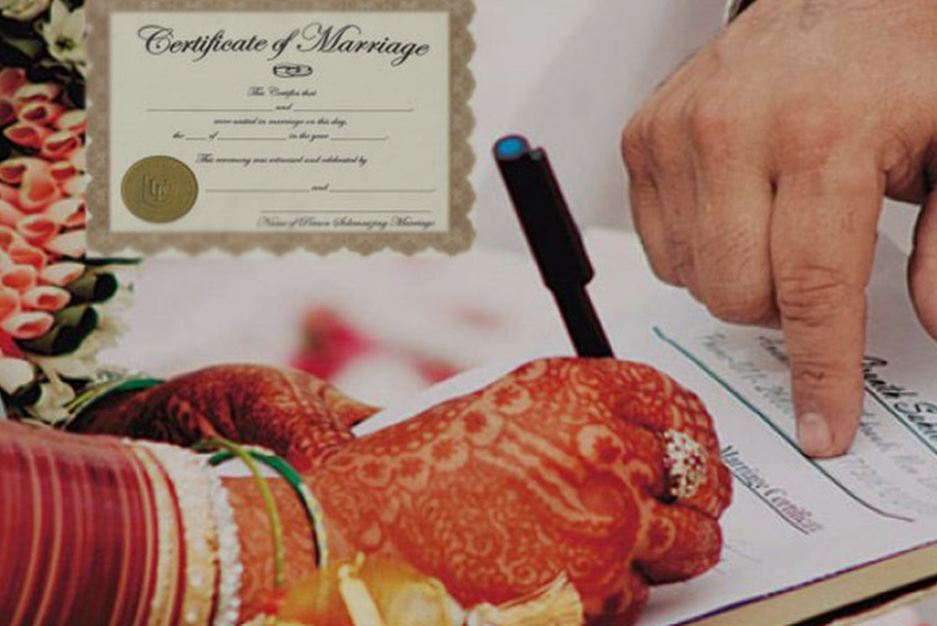
- Marriage Proofs (Joint Photograph, Invitation Card & Certificate of Marriage)
- Details of professions and earnings of husband and wife
- Family background information
- Evidence to prove that husband and wife are living separately for one year
- Property, Assets details of both parties


NRI Divorce In India

NRI divorce is a divorce that involves at least one party who is a non-resident Indian (NRI). The laws governing NRI divorce in India are based on the Hindu Marriage Act, of 1955 and the Special Marriage Act, of 1954. NRI divorces are subject to the same laws and regulations as any other divorce in India. The main difference is that the parties may be residing in different countries. This can make communication and the gathering of evidence more difficult. There are also some specific rules regarding the division of assets between the parties. It is important that both parties have access to an experienced lawyer to ensure that a fair settlement is reached.

Marriages to NRI’s are increasing, and so is the menace of desertion and deceit, for more dowries or any other reason. Two options are available to the spouse seeking divorce: The Hindu Marriage Act, Section 13B: This provides divorce by mutual consent if both spouses are Indians and married under the Hindu Marriage Act. One of the spouses can also file for Contested Divorce under the same act. In the case of spouses residing outside, the law of the land takes over with regard to foreign marriages. www.divorcelawyernearme.in provides the most excellent legal service in NRI Divorce related matters to our customers. The speed of the NRI divorce in Delhi process has increased in the last five years. We have a team of legal experts who dedicate their time, effort, and knowledge to assist the need of the clients in the most efficient manner. Our lawyers advise and craft the case during the pre-litigation phase to keep away from any disagreement, and through the entire trial. we are providing video call facilities to our NRI clients for better understanding of all aspects of NRI Divorce cases.

A MUTUAL CONSENT DIVORCE, AS PER THE HINDU MARRIAGE ACT, SECTION 13B, CAN BE FILED IF:
- Citizenship
- Overseas Citizenship
- Matrimonial Disputes
- Property Matters
- Passport Matters

To understand the complex situations, where each one may differ from the other completely, we offer a special video called Consultation to NRI Divorce cases to better understand your need and offer tailor-made solutions. 
Contact us for NRI Divorce in Delhi


Marriage Annulment In India

Conditions, Procedure & Laws in Delhi
Annulment is a legal procedure for declaring a marriage null and void. With the exception of bigamy and not meeting the minimum age requirement for marriage, it is rarely granted. A marriage can be declared null and void if certain legal requirements were not met at the time of the marriage. If these legal requirements were not met then the marriage is considered to have never existed in the eyes of the law. This process is called annulment. It is very different from divorce in that while a divorce dissolves a marriage that has existed, a marriage that is annulled never existed at all. Thus unlike divorce, it is retroactive: an annulled marriage is considered never to have existed.
Annulment of Marriage shall be applied within a year of marriage being a statutory period.
Grounds for Annulment:-
- Bigamy
- Marriage between Close Relatives
- Impotency
- Lack of Mental Capacity
- A Party was Under the Age of Consent
- Fraud or Force

The grounds for a marriage annulment may vary according to the different legal jurisdictions, but are generally limited to fraud, bigamy, blood relationship and mental incompetence including the following:
- Either spouse was already married to someone else at the time of the marriage in question;
- Either spouse was too young to be married, or too young without required court or parental consent. (In some cases, such a marriage is still valid if it continues well beyond the younger spouse's reaching marriageable age);
- Either spouse was under the influence of drugs or alcohol at the time of the marriage;
- Either spouse was mentally incompetent at the time of the marriage;
- If the consent to the marriage was based on fraud or force;
- Either spouse was physically incapable to be married (typically, chronically unable to have sexual intercourse) at the time of the marriage.
- The marriage is prohibited by law due to the relationship between the parties. This is the "prohibited degree of consanguinity", or blood relationship between the parties. The most common legal relationship is 2nd cousins; the legality of such relationship between 1st cousins varies around the world.
- Prisoners sentenced to a term of life imprisonment may not marry.
- Concealment (e.g. one of the parties concealed a drug addiction, prior criminal record or having a sexually transmitted disease)
An annulment may be granted when a marriage is automatically void under the law for public policy reasons or voidable by one party when certain requisite elements of the marriage contract were not present at the time of the marriage.


Judicial Separation In India

Conditions, Procedure and Laws in Delhi
Judicial Separation is a provision under Indian law which gives marriage a chance by not ending the marital ties but by allowing the husband and wife to stay apart, while still being married. Here, both the parties get a chance to introspect before they head on with the divorce proceedings. Under the decree of judicial separation both the parties live separately for a period of time but still carry the same legal status of husband and wife. Section 10 of the Hindu Marriage Act provides for Judicial Separation. Two Years separation is mandatory for applying Judicial Separation.
Following are the grounds on which judicial separation can be granted:
- after solemnization of the marriage, other party has treated their spouse with cruelty
- the other party has had voluntary sexual intercourse with any person other than his or her spouse after solemnization of marriage
- the other party has deserted the spouse for a continuous period of not less than 2 years immediately preceding the presentation of the petition
- the other party has ceased to be a Hindu by conversion to another religion
- that the other party has been incurable of unsound mind or has been suffering continuously or intermittently from mental disorder of such a kind and to such an extent that the petitioner cannot reasonably be expected to live with the other party;
- the other party has been suffering from venereal disease in a communicable form
- the other party has renounced the world by entering any religious order
- the other party has not been heard of as being alive for a period of seven years or more by those persons who would naturally have heard of him/her, had the party been alive.


Section 9 Hma In India

(Restitution of Conjugal Rights)
Conditions, Procedure & Laws in Delhi
Law provides that when either husband or the wife withdraws from the society of the other, the aggrieved party may apply to the Court for a direction that the other party should live with him or her. (Section 9 of the Hindu Marriage Act). Such a petition is to be filed before the Family Court.

The petitioner is to satisfy the Court that the other party has without reasonable excuse withdrawn from his or her society. So, if your wife has without reasonable excuse withdrawn from your society, you may file petition before the Family Court for such a relief. When you file such a petition, Court is to satisfy that you have a bona fide desire to bring your spouse to your company. Remember, when the Court finds that your own conduct debars you from seeking this relief of the company of your spouse or a fact shows that you are taking advantage of your own wrong, Court shall dismiss your petition.

Your petition may be dismissed in case Court finds that there is no truth in the statements made in it. If Court finds that your wife has reasonable excuse in withdrawing your society, even then your petition shall be dismissed. Court shall dismiss your petition, if it is found that there is any other legal ground for dismissing the same. Question arises as to when the other party would have reasonable excuse to withdraw from the society? In this respect, it is to be remembered that if your wife withdraws from your society and she alleges that she withdrew from your society for a reasonable excuse, it is for her to prove that she withdrew for a reasonable excuse. If it is proved that your conduct as a husband is grave and weighty matter which gives the wife good cause for leaving you, you as husband would not be entitled to obtaining a decree for restitution of conjugal rights.
The decree of restitution of conjugal rights is not binding if the spouse has sufficient reason of desertion and both husband and wife can file this petition before the Family Court.


Domestic Violence In India

Conditions, Procedure, Laws in Delhi
Any act, omission or commission or conduct by husband or his relatives to wife (hereinafter referred as an aggrieved person) shall constitute domestic violence in case it harms or injures or endangers the health, safety, life, limb or well-being, whether mental or physical, of the aggrieved person or tends to do so and includes causing physical abuse, sexual abuse, verbal and emotional abuse and economic abuse; or harasses, harms, injures or endangers the aggrieved person with a view to coerce her or any other person related to her to meet any unlawful demand for any dowry or other property or valuable security; or has the effect of threatening the aggrieved person or any person related to her by any conduct, otherwise injures or causes harm, whether physical or mental, to the aggrieved person.
The Protection of Women from Domestic Violence Act, 2005, provides its own protection and self-defense as reasons in which the above will automatically become invalid. The main purpose is the protection of the wife or female live-in partner from the husband/partner/relatives.
We can help you file for a case under this section, with our specialized services helping women in distress. Guard of Women from Domestic Violence Act, 2005, commonly known as Domestic Violence Law provides the diversity of rights to women casualties of Domestic harassment. The reliefs are as follows:-
- Right to reside in Shared Household
- Protection Orders
- Residence Orders
- Monetary Reliefs
- Right to Maintenance
- Child Custody & Visitation Rights
- Compensation Orders

Such human rights include a claim of pecuniary relief, rights to dwelling, compensation for domestic violence, protection order, and child custody in the middle of other reliefs. Domestic violence Act has approached into force with the object of expeditious removal of the claim of women who are victims of domestic violence. The complaint is filed in the Court of Magistrate which is authorized to pass orders. Domestic violence has moved toward force with the objective of as long as monetary justice and independence for women victims of domestic violence. The law purposely provides the right to habitation. Right to residence includes shelter in the common household irrespective of the fact whether the wife has the right, name, or notice over the property/residence. This specific provision is put in law to take into custody the threat of abandoning the woman and children, if any, without a crown and shelter in case of matrimonial disputes.
Hence, the law lean-to a mandate on the husband to provide residence to the wife. Such residence can be a mutual household where husband and wife lived together and made such house their matrimonial house. Alternatively, the law mandates the husband to provide interchange residence comparable to the one previously enjoyed by the wife while living together. Law relating to Domestic brutality has urbanized significantly. Yet, the law is still in determining years with different judgments and case laws are evolving. Our expert domestic violence lawyers keep tabs and updated with changing laws for the successful prosecution or defense of the complaint. Good lawyers ensure maximum benefits to victims. In defense and ensures the best strategy to counter the claim and get justice in cases of motivated complaints. The case under the law is begins by filing a complaint element all events of domestic violence before the Court of magistrate. Such a complaint is generally accompanied by an interim application. The magistrate trying the complaint is authorized to execute summons of the case through a protection officer or by the alarmed police station. In a terrible case requiring urgent relief, the court has the power to grant an ex-parte order.
Another important feature of the law is that relief can be claimed not only against the husband but also against in-laws. Earlier there were sights that domestic violence complaints cannot be filed against women. The rationale at the back such views was that Domestic violence is for the protection of women. However, this argument is set to rest by a decision of the Hon’ble High Court of Delhi. Hence, the complaint about domestic violence is maintainable against females or women. The range of law is additionally widened in which it is elucidated that not only the wife but any other female livelihood in a domestic relationship can search for a remedy. Thus, the sister or mother can assert relief against the son or father and/or brother for the release. The law for the primary time is familiar with the survival of legal rights for females who are not married to claim monetary release, compensation, residence, etc from their partner.


Maintenance And Alimony In India

Conditions, Procedure and Laws in Delhi
Indian Law provides the right to claim maintenance to wife and husband at any stage, it may be before and after divorce, whether the divorce is filed or not, and whether the divorce proceedings have started or not. Only legally married parties are eligible for the provision.
It's objective is to provide means and provisions for the spouse with lesser means, although it is mostly the man who is asked to give Maintenance and Alimony in the cases and seldom are men found to be financial beneficiaries in such a case. Whether a man or woman, we help both in Maintenance and Alimony cases, as the judiciary is generally tilted towards women in such cases.

TYPES OF MAINTENANCE AND ALIMONY
Ad-Interim Maintenance: During course of hearing in a case, an ad-interim maintenance shall be granted to a person in utmost urgent need, which shall be paid from the date of order till the decision of interim maintenance.
Interim Maintenance: After completion of pleadings in a case, the interim maintenance shall be granted to a person as decision of case shall take its own time and in the need of hour, interim maintenance shall be awarded to a person according to financial status of other party.
Maintenance: After final hearing in a matter of maintenance, the Court shall decide the maintenance according to financial status of other party from the date of filing the petition till further orders.
Permanent Alimony: It is decided at the time of the decree of divorce for husband/wife by court or partner in case of mutual consent divorce so after divorce dependent party can survive their dignity and maintain their living standard in society.
These orders for alimony purely depends on the fact and circumstances of the case and the court decision.
Advocate Rahul Singh has a team of the best divorce expert lawyers based in Delhi with experience in handling divorce-related matters. We have had successful cases with handling divorce Maintenance and Alimony in favor of our clients. We are well known for our 100% dedicated, personalized, cost-effective, and result-oriented divorce services in Delhi. We can help you with your case by setting up an appointment online and we will get back to you within 24 hours or by phone for the first consultation for free.

Laws involved for granting maintenance:-
- Section 125 Cr.P.C. (Criminal Procedure Code)
- Section 20 & 22 of Protection of Women from Domestic Violence
- Section 24 and 25 of the Hindu Marriage Act
- Section 18 of the Hindu Adoption and Maintenance Act


Criminal Proceedings Under Section 498A In India

Conditions, Procedure and Laws in Delhi
Section 489A of the Indian Penal Code, 1860 state that Husband or relative of husband of a woman subjecting her to cruelty, Whoever, being the husband or the relative of the husband of a woman, subjects such woman to cruelty shall be punished with imprisonment for a term which may extend to 3 years and shall also be liable to a fine or both.
For the purposes of this section, “cruelty means”-
(a) any willful conduct which is of such a nature as is likely to drive the woman to commit suicide or to cause grave injury or danger to life, limb, or health (whether mental or physical) of the woman; or
(b) harassment of the woman where such harassment is with a view to forcing her or any person related to her to meet any illegal demand for any property or valuable security or is on account of failure by her or any person related to her to meet such demand.
After registration of FIR, there are three types of Bail under section 498A of IPC which shall be applied to the Court of Sessions and Trial Court Under section 437, 438 and 439 of the Code of Criminal Procedure, 1973:
- Interim protection Bail
- Anticipatory Bail
- Regular Bail.
Advocate Rahul Singh has expertise in both defending and prosecuting cases under 498A of IPC. We have protracted knowledge of court procedures, as well as attempting to reconcile and settle the issues as in favor of the client as possible to minimize potential harm. In some cases under section 498A of IPC, the wife can file a fraud case against the husband or relatives to harass them and mention their names in her complaint. In this case, our expert experienced lawyer team will help for mutual settlement and safeguard the husband and relatives in case of fraudulent use of 498A of IPC. We provide our expert legal service to safeguard and get justice to real suffering wives too, with equal dedication by using the law in the right way.


Child Custody In India

Conditions, Procedure and Laws in Delhi
After a marriage breaks down or ends up in separation of spouses, the person who gets affected the most is the children, who is born out of the marriage. Thus, while keeping in mind the right of parent’s to the custody of a child, the Indian Law, holds the child’s welfare as the most crucial factor of consideration while deciding upon who gets the custody of a minor child.

Which Factors Constitute Welfare of A Child, there are three factors which constitutes the welfare of the child:-
- Ethical upbringing of the child
- Safe-keeping of the child
- Good education to be imparted
- Economic well-being of the guardian
Types of Custody:-
Permanent Custody: Permanent child custody means that the minor will be under the guardianship of that parent with periodical interaction and visitation with the other parent. The motive of the courts for this child custody decision is to give a better life to the child in a safe and fulfilling atmosphere and also make sure that the child is not divested of the attachment of the other parent during his or her shaping years
Interim Custody: It is allotted to make sure the progress of the child is maintained, while the case is pending before the court.
Legal Custody: Legal custody of a child does not like joint custody or a single parent has the right of child custody. It means that the court gives the right to both parents can take every important decision for the child-like education, medical treatment, etc.
Normally in mutual consent divorce cases, legal custody is granted to both the parents together but in contested or 498A cases where the divorce is complicated and parents do not agree with each other, then in such cases, the court grants legal custody to any of one parent
 Joint Custody: Joint child custody actually means that the child will be cared for by both parents alternately. In some cases, the rotation of the child between the parents may last for a few days, a week, or even a month. By These arrangements, the child can get attention and care from both parents and both parties equally can be an important part of the child.
We can help you to file a case for child custody by filing the draft in the most professional manner and presenting the correct arguments while you prepare to give your child the life that a child deserves.

Laws involved in Child Custody:- - Section 26 of the Hindu Marriage Act, 1955
- Section 21 of the Protection of Women from Domestic Violence Act, 2005
- Guardians and Wards Act, 1891

Who Has A Right On Minor Child After Divorce?
Both the parents have an equal right to the custody of a child. However, who gets the custody of a child is still a question which the court has the power to decide upon. Moreover, when it comes to personal laws the statues are conflicting as compared to secular enactment in the form of The Guardian and Ward Act, 1890 which holds the welfare of the child as the paramount importance and thereby the court of competent jurisdiction endeavor to strikes a balance between the two. And as because the custody of the children is given to one parent that doesn’t implies that the other parent cannot be in contact or see the child. The courts in India makes sure that the child gets attention and affection of both the parents. The court gives the other parent visitation rights of which the conditions are determined by the court.
The custody of a child can be claimed either by mother or the father. In any of the case where the two of the parents are not in the picture due to operation of some other laws or deceased then in such situation, the maternal or the paternal grandparents or any other relatives can claim custody of the child strictly out of compassion towards the child. In many cases, the court appoints the third person as the guardian of the child.

Who Has The Priority Claim To The Custody of A Child?
The Hon’ble Supreme Court and other courts in India have repeatedly mentioned that for the custody of a minor, the only consideration is the welfare of the minor, irrespective of the claims of the parties to the custody of children.
Under Hindu law and as well as Secular law, the custody of the child under the age of five is usually awarded to the mother. In most of the cases fathers gets the custody of the older boys and mother of the older girls. Moreover, child’s interest is the main criteria and the choice of the child above the age of nine is considered by the court. Wherein a mother if found to ill-treat and neglect the child is not given custody.


Court Marriage In Delhi

What is a court marriage?
Unlike a regularly solemnized marriage, Court Marriage is an economical and hassle-free alternative that lets couples from different nationalities, religions, and castes solemnize and register their union through a simple procedure that is carried out in the presence of a marriage registrar and 3 witnesses. our expert team of lawyers will help you in every step of proceedings and give you the best legal advice for process of court marriage in Delhi 

Who needs a court marriage?
Individuals looking to tie a knot under the Special Marriage Act can opt for court marriages to legalize their marriage in an economical and hassle-free manner. we provide expert service for our clients for court marriage in Delhi.

Conditions for Court Marriage
Under Section 4 of The Special Marriage Act, the following rules are listed for court marriages in India:
1. The parties must meet the necessary conditions as listed in the act before signing the Civil Marriage Contract.
2. Neither of the parties should already be in a marriage while applying for the court marriage. If the previous spouse is deceased or divorced, then the court marriage can be obtained.
3. The parties entering the court marriage procedure must be doing so at their own free will i.e. there should be no pressure made on them for doing the same and neither of the parties should be of an unsound mind while entering into the procedure of court marriage.
4. Court marriage can only take place if both the bride and groom are of age as legally accepted in India i.e. for the bride it should be 18 years and above and for the groom it should be 21 years and above.
5. The parties to the marriage should not fall within the degree of prohibited relationship.

DOCUMENTS REQUIRED FOR COURT MARRIAGE
Separate affidavits from bride and groom stating:
Date of birth
Present marital status: unmarried/widower/ divorcee
- Affirmation that the parties are not related to each other within the degree of prohibited relationship defined in the Special Marriage Act.
- 4 Passport size photographs each of bride and groom
- Residential Proof of both bride and groom
- Proof of Date of Birth of both bride and groom
- Notice of Intended Marriage duly signed by both bride and groom
- Copy of divorce decree/order in case of a divorcee and death certificate of spouse in case of widow/widower.
- Requirements from the three Witnesses individually for Court Marriage
- One passport size photograph of each witness
- Photocopy of PAN card of each witness
- Photocopy of Identity Document of each witness
Contact us for Court Marriage in Delhi. our expert team of lawyers will help you in every step of proceedings and give you the best legal advice for court marriage in Delhi.


Arya Samaj Marriage In Delhi

Arya Samaj marriages are very simple to execute and the rituals are straight. Couples from different religions who fall under the broad umbrella of Hindus in India can perform Arya Samaj. This is a choice and wiling preference for couples where one person belongs to Buddhism, Jainism or Sikh religion. The ceremony performs adhering to the Vedic rituals in an Arya Samaj temple. According to the Vedic principles, the hymns spelt during the ceremony are explained to the bride and groom. Arya Samaj marriage is just like Hindu marriage, where the marriage takes place around the fire. Also, it is legally recognised. In fact, there is the Arya Samaj Marriage Validation Act of 1937 provided under the Hindu Marriage Act, 1955.

Who are eligible for an Arya Samaj marriage?
1.The groom’s minimum age has to be 21 whereas the bride should have 18.
2.Any person who is a Hindu, Buddhist, Jain, Sikh can perform Arya Samaj Marriage.
3.Any person who is not a Muslim, Christian, Parsis or Jews can also perform this type of wedding style.
4.Inter-Caste Marriages and Inter-Religious Marriages are eligible in an Arya Samaj Marriage.  But none of the marrying persons should be a Muslim, Christian, Parsis or Jews.
5.If a non-Hindu couple would like to perform the marriage, the Samaj allows them to convert through a process called Shuddhi. Muslims, Christians, Parsis or Jews, if, out of their free will and consent are ready to convert and embrace Hindu Religion, the Arya Samaj Mandir perform a ritual called Shuddhi. Shuddhi means purification for such conversion, and thereafter, such a convert can perform Arya Samaj Marriage.

Six-step procedure for Arya Samaj registration
1.Make an appointment at the sub-divisional magistrate’s office. It takes at least a fortnight. So it’s advisable to start this procedure before the marriage takes place. 2.Fill the registration form. 3.Submit all the proofs and documents needed.
4.Two passport size photographs of the bride and the groom along with a photograph of the marriage.  Bring the marriage invitation card (optional). 5.Two witnesses who have to be physically present to sign. 6.Attestation of gazetted officer is mandatory.
Consequently, after fulfilling all the formalities, the magistrate’s office will grant the marriage certificate, which is legally recognised by the court.

Documents required
1.4 copies of coloured photographs of both the bride and the groom.
2.Proofs for the DOB and proofs for address by both the parties.
3.The bride and the groom should have reached the eligibility.
4.Two witnesses are acceptable to witness the wedding.
5.In case if one of the spouse is a widow, then the widow has to submit the death certificate of the dead spouse.
6.If one of the spouse is a foreign citizen or holding a foreign passport or is having foreign residential address, then the spouse requires the Certificate of present marital status of the party/ NOC from the concerned Embassy and Valid VISA.

Apply online for marriage registration in delhi
Users can apply online for marriage registration in Delhi
Visit : https://edistrict.delhigovt.nic.in/in/en/Account/Login.html

All Services
Call Us
Whatsapp